
Amaram
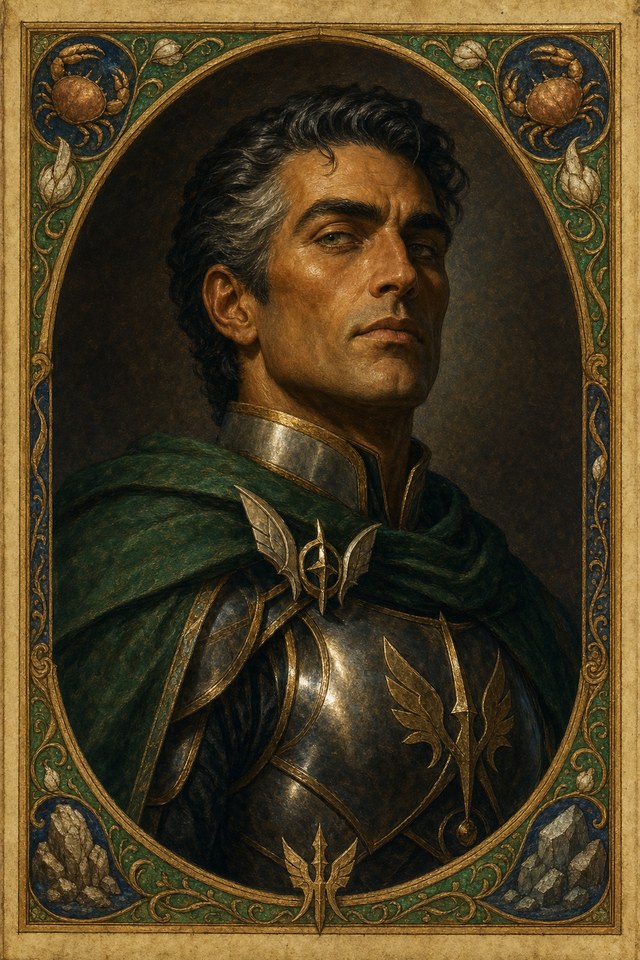
| House / Order | Sons of Honor; House Amaram |
|---|---|
| Race / Culture | Alethi |
| Status | Deceased |
| Origin | Alethkar; Shattered Plains; Thaylen City |
| Born | Alethkar |
| Died | Battle of Thaylen Field (Oathbringer) |
| Weapon | Shardblade; Shardplate (taken from Kaladin) |
| Fate | Falls to Odium; transformed and killed at the Battle of Thaylen Field |
| Portrayed by |
Meridas Amaram is a major antagonist in The Stormlight Archive by Brandon Sanderson. Outwardly the model of an honorable Alethi highlord -- celebrated as a paragon of the Codes of War and admired by Dalinar Kholin -- Amaram is secretly a member of the Sons of Honor, a conspiracy seeking to trigger the return of the Voidbringers and the Knights Radiant. His central crime sets Kaladin on the path to slavery and defines their mutual hatred.
Amaram represents the corruption of honor: a man who believes his noble cause justifies betrayal, theft, and murder, all while maintaining a reputation for integrity.
Background
Amaram was a respected highlord in Alethkar, a protege of Gavilar Kholin and an admirer of the Codes of War who cultivated an image as the most honorable man in the kingdom -- so much so that Dalinar Kholin long held him up as an ideal. Secretly, however, Amaram belonged to the Sons of Honor, a faction (led in part by Gavilar) that worked to bring back the Heralds and the Knights Radiant by hastening a new Desolation, believing the church and the old order could thereby be restored.
Biography
The defining betrayal
Years before the main events, Kaladin served as a spearman in Amaram's army. When Kaladin and his squad won a Shardblade and Shardplate by killing an enemy Shardbearer, Kaladin gave the priceless Blade to Amaram and asked only for his men's freedom. Instead, Amaram had Kaladin's entire squad murdered to keep the Shards' acquisition secret, branded Kaladin a slave with the glyph shash, and sold him into slavery -- claiming the Shardblade as his own. This atrocity is the wound at the heart of Kaladin's hatred of lighteyes.
Words of Radiance
When Kaladin, now a captain in Dalinar's service, encounters Amaram again, the truth comes out. Kaladin attacks him and is imprisoned for striking a lighteyes; the confrontation strains his bond with Sylphrena. Amaram, exposed as a liar and murderer to Dalinar, is stripped of standing -- but his belief that he acted for the greater good never wavers.
Oathbringer
Amaram openly aligns with Odium and the enemy, taking command of forces against the coalition. At the Battle of Thaylen Field, he willingly takes in Voidlight and is transformed into a monstrous, empowered servant of Odium. He is defeated and killed in the battle, dying still convinced of his own righteousness.
Character
Amaram is charismatic, disciplined, and self-justifying, genuinely believing his betrayals serve a higher purpose -- the salvation of Roshar through the return of its ancient powers. This conviction makes him more insidious than a mere opportunist like Sadeas: he is a true believer whose noble self-image survives even his most monstrous acts. He embodies the danger of a good reputation masking corrupt deeds.
Powers and abilities
Amaram was a Shardbearer, wielding the Shardblade and Shardplate he stole from Kaladin, and a capable commander schooled in the Codes of War. After siding with Odium, he took in Voidlight at the Battle of Thaylen Field, which transformed him into a grotesque, superhumanly powerful champion of the enemy before his death.
Relationships
- Kaladin -- the spearman he betrayed, enslaved, and robbed; his nemesis.
- Dalinar Kholin -- who long admired him as a paragon of honor before learning the truth.
- Gavilar Kholin -- his mentor and fellow Sons of Honor conspirator.
- The Sons of Honor -- the secret faction whose cause he served.
- Odium -- the enemy god to whom he ultimately gave himself.
Quotes
What I do, I do for Alethkar. For all of Roshar.
The ends, Kaladin. Sometimes the ends do justify the means.